3-Day Notice to Pay Rent or Quit California: What Landlords Must Get Right in 2026
I'm Steven D. Silverstein, and I've been handling evictions in Southern California since 1979. In 45+ years and thousands of cases, the single most common reason I see landlords lose in court is a defective 3-day notice. One wrong number, one extra charge, one missed deadline, and the judge throws out your case. You start over. The tenant stays another month.
The rules got even stricter after the Eshagian v. Cepeda ruling in 2025. Here's what you need to know to get your 3-day notice right the first time.
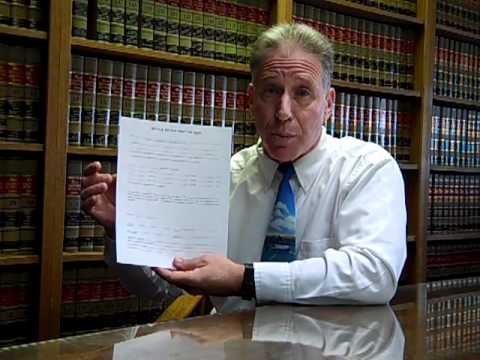
What is a 3-Day Notice to Pay Rent or Quit?
A 3-day notice to pay rent or quit is a legal document California landlords must serve to tenants who have failed to pay rent on time. It formally demands that the tenant either pay the full amount of rent owed or vacate ("quit") the rental property within three business days.
Under California Code of Civil Procedure Section 1161, serving this notice is a mandatory prerequisite before filing an unlawful detainer (eviction) lawsuit. Skip this step or get it wrong, and the court will dismiss your case. I've watched landlords lose months of rent because they tried to save money by writing their own notice and got one detail wrong.
The Eshagian v. Cepeda Ruling Changed the Rules in 2025
In June 2025, the California Court of Appeal published Eshagian v. Cepeda (Case No. B340941), and it sent shockwaves through the landlord community. The court threw out a landlord's eviction judgment because his 3-day notice didn't give the tenant enough information to understand the deadline.
The landlord served a notice demanding $8,000 in unpaid rent. On paper, it looked fine. But the court said the notice failed because it didn't clearly tell the tenant: (1) when the three-day period started, (2) when it ended, (3) that weekends and court holidays were excluded from the count, and (4) that the tenant would lose possession of the property if they didn't pay in time.
The result? The landlord lost the case. The judgment was vacated. The tenant stayed.
What Eshagian Means for Your 3-Day Notice in 2026
Your notice must now clearly state:
- • The exact date of service (must match the date on the notice)
- • The specific expiration date of the 3-day period
- • That weekends and court holidays don't count toward the three days
- • Specific instructions on how and where to pay
- • An explicit warning that failure to pay or vacate will result in eviction proceedings
An "ordinary tenant" must be able to read your notice and know exactly what to do, by when, and what happens if they don't. If there's any ambiguity, a judge can throw it out.
The California Apartment Association recommended members temporarily stop using its standard 3-day notice forms after this ruling until revised versions were released in July 2025. If you're still using a template you downloaded before July 2025, it probably doesn't comply. Call 714-832-3651 and let me review your forms before you serve them.
Common Mistakes That Void Your 3-Day Notice
After thousands of eviction cases across Orange County, Los Angeles, Riverside, and San Bernardino, these are the mistakes I see landlords make over and over. Every single one will get your case thrown out.
1. Wrong Rent Amount
The amount on your notice must be the exact rent owed. Not a penny more. If the lease says $2,100/month and the tenant owes two months, the notice says $4,200. Period.
You cannot include late fees, even if the lease has a late fee clause. You cannot include utility charges, damage deposits, or parking fees unless those amounts are specifically defined as "rent" in the lease agreement. Adding even $25 in late fees to the amount will void the entire notice under CCP 1161(2).
2. Improper Service
California Code of Civil Procedure Section 1162 spells out exactly three ways to serve a 3-day notice. There are no shortcuts. I've seen landlords tape the notice to the door, slip it under the door, text it, email it, or hand it to a child. None of that counts.
You must attempt personal service first. If that fails, you can use substituted service (leave with a competent adult at the residence or workplace AND mail a copy). Post-and-mail is the last resort, and only after you've documented failed attempts at personal service. Read the full guide on proper service methods.
3. Notice Period Calculation Errors
The three-day count does not include the day of service. If you serve the notice on Monday, Day 1 is Tuesday. The three days also exclude weekends and court holidays (CCP 1161).
After Eshagian, your notice must now state the specific expiration date. If you serve on a Monday, the notice expires Thursday. File your unlawful detainer on Friday at the earliest. File too early and the case gets dismissed. At the Orange County Superior Court in Santa Ana, judges will check this math. Get it wrong and you start over.
4. Including Amounts Other Than Rent
This deserves its own section because it trips up landlords constantly. A 3-day notice to pay rent or quit can only demand unpaid rent. That's it.
No attorney fees. No cleaning costs. No HOA fines you passed through. No "holdover" charges. No security deposit deductions. You can pursue those amounts in court, but they cannot appear on the 3-day notice. If they do, the entire notice is defective and your eviction case is dead on arrival.
5. Missing or Incorrect Tenant Names
The notice must name every tenant on the lease. If the lease says "John Smith and Jane Smith," both names go on the notice. Serving only one tenant when both are on the lease creates grounds for dismissal. If there are occupants not on the lease, add "and all other occupants" to cover unnamed residents.
Not sure if your notice is airtight?
A 10-minute phone call now can save you months of delay. I'll review your notice and tell you if it will hold up in court.
Types of Pay or Quit Notices in California
3-Day Notice to Pay or Quit
The most common type for residential and commercial properties when rent is unpaid.
- • Used for non-payment of rent
- • Tenant has 3 business days to pay or leave
- • Weekends and court holidays excluded
- • Must include specific expiration date (post-Eshagian)
30-Day or 60-Day Notice
Used for month-to-month tenancies when ending the lease (not for non-payment).
- • 30-day if tenant lived there under 1 year
- • 60-day if tenant lived there 1+ year
- • Subject to just cause requirements (AB 1482)
Don't Confuse the Notices
Using the wrong notice type is a common mistake that can delay your eviction by weeks. A 3-day notice is only for non-payment of rent. For lease violations or ending a tenancy, different notices apply. If you're not sure which notice to use, that's a sign you need an attorney.
What Your 3-Day Notice Must Include (2026 Requirements)
California law is strict about what a 3-day notice must contain. After Eshagian, the bar is even higher. Missing or incorrect information will invalidate your notice and force you to start over.
Do NOT Include:
How to Properly Serve a 3-Day Notice (CCP 1162)
Proper service is just as important as the notice itself. California Code of Civil Procedure Section 1162 recognizes three methods of service, and you must use them in order:
1. Personal Service (Best Option)
Hand-deliver the notice directly to the tenant. This is the strongest form of service and the hardest for tenants to dispute in court. At the Orange County Superior Court in Santa Ana, I've watched judges grill landlords about why they didn't attempt personal service first. Always try this method.
2. Substituted Service
If the tenant isn't home, leave the notice with a person of suitable age and discretion at the residence or the tenant's workplace, AND mail a copy to the tenant. Both steps are required under CCP 1162.
3. Post and Mail (Last Resort)
Only if personal and substituted service fail: post the notice in a conspicuous place on the property AND mail a copy. You need documentation of failed personal service attempts — dates, times, what happened. I keep a log for every case. Without it, you're giving the tenant's attorney an easy win on a motion to quash.
Filing After Your 3-Day Notice: Orange County and Southern California
Once the 3-day period expires and the tenant hasn't paid or vacated, you file an unlawful detainer lawsuit. Here's what to expect by county:
| County | Courthouse | Filing Fee |
|---|---|---|
| Orange County | Central Justice Center, 700 Civic Center Dr W, Santa Ana | $240-$435 |
| Los Angeles County | Stanley Mosk Courthouse (or local district court) | $240-$435 |
| Riverside County | Riverside Historic Courthouse, 4050 Main St (or local branch) | $240-$435 |
| San Bernardino County | San Bernardino Justice Center, 247 W Third St | $240-$435 |
In Orange County, unlawful detainer cases are heard at the Central Justice Center in Santa Ana. Uncontested cases typically move from filing to judgment in 3-4 weeks. Contested cases can stretch to 3-6 months depending on the judge's calendar and whether the tenant hires an attorney. See the full California eviction timeline for a week-by-week breakdown.
Filing fees depend on the amount claimed: $240 (under $10,000), $385 ($10,000-$25,000), or $435 (over $25,000). See our Orange County eviction cost guide for a full breakdown.
3-Day Notice to Pay Rent or Quit: Timeline
Day 0
Notice Served
Tenant receives the 3-day notice. The day of service does not count as Day 1.
Days 1-3
Waiting Period
Tenant has 3 full business days to pay or vacate. Weekends and court holidays do not count. Example: serve on Wednesday, Days 1-3 are Thursday, Friday, Monday. Do not accept partial payment.
Day 4+
File Unlawful Detainer
If tenant hasn't paid or vacated, file an unlawful detainer at the courthouse. Do not file on Day 3 — wait until the notice has fully expired. Filing one day early means starting over.
What Happens After the 3-Day Period Expires?
If your tenant doesn't pay the full rent or vacate by the end of the notice period, you file an unlawful detainer lawsuit. This is where the 3-day notice becomes your most important piece of evidence — the judge will read it line by line. If it's defective, the case dies right there.
Do NOT accept partial payment after serving the notice. I cannot say this firmly enough. Accepting any amount of rent — even $50 — can void your notice and reset the entire process. If a tenant shows up with half the rent and a sad story, call me before you take it. I've personally watched landlords lose cases because they accepted $500 on a $2,000 notice out of sympathy. That $500 cost them three more months of a nonpaying tenant.
The unlawful detainer process typically takes 3-6 weeks from filing to judgment for uncontested cases. If the tenant fights it, you're looking at 3-6 months. Under the new AB 2347 rules (effective 2025), tenants now have 10 court days (up from 5) to respond to a summons, adding roughly a week to every case. A motion for summary judgment can speed things up when the tenant has no real defense.
Here's the math most landlords don't think about: a defective 3-day notice costs you the filing fee ($240-$435), your attorney fees for the first attempt, and at minimum another month of lost rent while you re-serve and re-file. On a $2,500/month rental, one bad notice costs you $3,000+ before you're back where you started.
This is the point where most landlords hire an attorney.
You've got a nonpaying tenant, a ticking clock, and a notice that needs to be perfect. I've filed thousands of these. Let me handle it.
Frequently Asked Questions: 3-Day Notice to Pay Rent or Quit
What is a pay or quit notice in California?
A pay or quit notice in California is a legal document that landlords must serve to tenants who have failed to pay rent. The most common type is the 3-day notice to pay rent or quit, which gives tenants three days to either pay the full amount of rent owed or vacate the property. This notice is required before a landlord can file an unlawful detainer (eviction) lawsuit.
How many days does a tenant have to pay rent or quit in California?
In California, tenants typically have 3 days to pay rent or quit after being served with a notice for non-payment of rent. The three days do not include weekends or court holidays. If the third day falls on a weekend or holiday, the tenant has until the next business day to pay or vacate.
What happens if a tenant doesn't respond to a pay or quit notice?
If a tenant fails to pay the rent or vacate the property within the notice period, the landlord can file an unlawful detainer lawsuit in court. The court process typically takes 3-6 weeks, after which a judgment may be entered allowing the sheriff to physically remove the tenant from the property.
Can a landlord accept partial rent after serving a pay or quit notice?
Accepting partial rent after serving a pay or quit notice can void the notice in California. If a landlord accepts any partial payment, they may need to serve a new notice for the remaining balance. Consult with an eviction attorney before accepting any payment after serving a notice.
How must a pay or quit notice be served in California?
In California, a pay or quit notice can be served by: (1) personal delivery to the tenant, (2) substituted service by leaving it with a person of suitable age at the residence or workplace and mailing a copy, or (3) posting and mailing if the tenant cannot be found. Proper service under CCP 1162 is required for the notice to be legally valid.
What must be included in a California pay or quit notice after the Eshagian ruling?
After the 2025 Eshagian v. Cepeda ruling, a valid 3-day notice must include: the tenant's name, property address, exact amount of rent due (no late fees or other charges), the rental period the rent covers, the specific start and expiration dates of the 3-day compliance period (excluding weekends and court holidays), clear payment instructions, and an explicit warning that failure to pay or vacate will result in eviction proceedings. The notice must be signed and served on the same date.
Get Your 3-Day Notice Right the First Time
I've handled thousands of evictions since 1979. The landlords who call me before serving their notice save weeks of delay and thousands of dollars in lost rent. The ones who call me after their case gets dismissed wish they had.
Email UsRelated Resources
Service of 3-Day Notice
Detailed guide on proper notice service methods under CCP 1162
Unlawful Detainer Process
What happens after the notice period expires
California Eviction Timeline
Week-by-week timeline from notice to lockout
AB 1482 Tenant Protection Act
Just cause requirements that may affect your eviction